Overhanging branches are one of the most common causes of disputes between neighbours. Branches dropping leaves in your gutters, hanging over your pool or brushing your roof can be frustrating, so it’s natural to wonder whether you can simply cut them back yourself.
In Queensland, the short answer is yes, in most cases, but only up to your boundary, and only if the tree isn’t protected.
Your right to cut back to the boundary
Under common law, you have the right to remove branches and roots that overhang your property, back to your boundary line. You can return the trimmings to your neighbour or dispose of them yourself.
There are limits, though:
You can only cut back to the boundary. You can’t go onto your neighbour’s property or cut beyond the boundary line without their permission.
The work must comply with any tree or vegetation protection orders. Some trees on the Gold Coast are protected by council, and cutting them without approval can lead to significant penalties.
Pruning shouldn’t damage the health of the tree. If your cuts cause the tree to decline or become unstable, you may be responsible.
Talk to your neighbour first
Before doing anything, it’s always worth having a friendly conversation. Most neighbours are happy to share the cost of pruning or arrange the work themselves once they know there’s a problem. In most cases the person responsible for the tree, known as the tree-keeper, is the registered owner of the land it grows on. That can also be a body corporate or an organisation.
The formal notice process
If talking doesn’t work, Queensland law provides a formal notice for overhanging branches. It applies when branches:
Overhang more than 50cm over your boundary.
Are less than 2.5m above the ground.
Aren’t covered by a vegetation protection order.
The notice must give your neighbour at least 30 days to remove the branches. If they don’t act in time, you can arrange the work yourself and recover up to $300 a year from them towards the cost.
For branches higher than 2.5m, or for issues like root damage or a tree you believe is dangerous, the formal path is an application to the Queensland Civil and Administrative Tribunal (QCAT). QCAT should be seen as a last resort, after you’ve tried to resolve the matter directly.
Why boundary cuts can go wrong
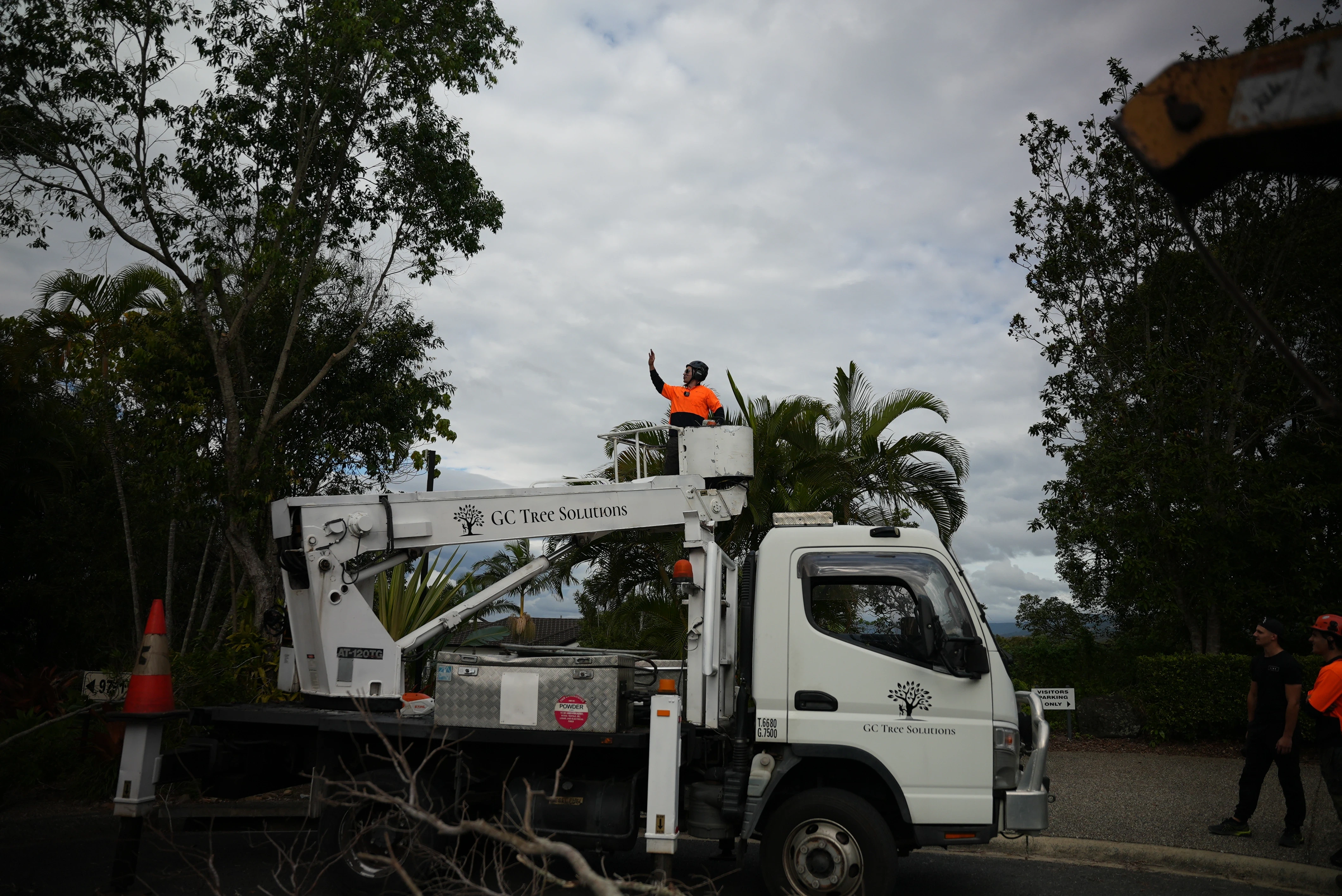
A cut made at the boundary line isn’t always a good pruning cut. Cutting a large limb mid-branch can leave the tree open to decay, cause heavy regrowth, or unbalance the canopy. Large branches can also be dangerous to remove without the right equipment.
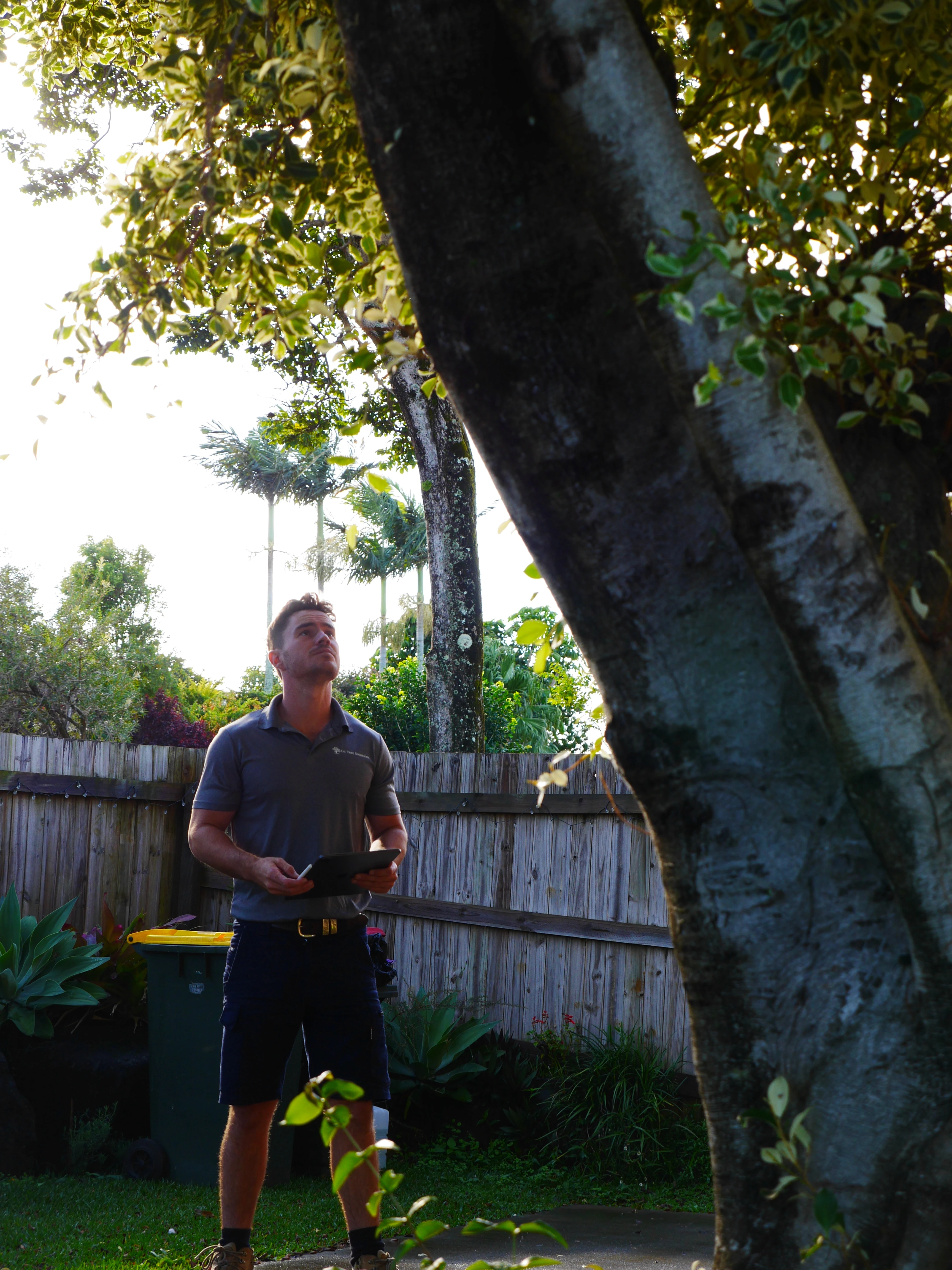
A qualified arborist can prune overhanging branches to Australian Standards, at a point that keeps the tree healthy while still clearing your property. They can also check whether the tree is protected before any work begins.
This article is general information only. For your specific situation, check with Gold Coast City Council about protected vegetation, or see the Queensland Government’s guidance on tree disputes.
At GC Tree Solutions, we regularly help Gold Coast homeowners deal with overhanging branches from neighbouring trees. We can assess the tree, check council requirements, and prune it safely and correctly. Contact GC Tree Solutions for an obligation-free quote.