Trees can look healthy from the ground while hiding problems like internal decay, root damage or weak branch unions. Regular inspections help catch these issues early, before they become expensive or dangerous.
So how often should your trees be checked? There isn’t a single rule that applies to every tree. The right schedule depends on the tree and where it is.
What affects how often a tree should be inspected
Size and age. Large, mature trees carry more weight and are more likely to have hidden defects. They generally need closer attention than young trees.
Location. A tree overhanging a house, driveway, pool, footpath or play area carries more risk than one in an open paddock, and should be checked more often.
Condition. Trees showing signs of decline, such as dieback, dead branches, fungi or a new lean, should be inspected sooner rather than later.
Changes on the site. Construction, trenching, new paving or changes in soil level near a tree can damage its roots and affect its stability.
Species. Some species are more prone to dropping limbs or developing structural problems than others.
A practical guide
Check your own trees regularly. Walk around your property every few months and look for dead branches, cracks, fungi, lifting soil or anything that has changed.
Have large trees near buildings professionally inspected regularly. Many property owners have them checked once a year, and the lead-up to storm season is a good time to do it.
Inspect after every major storm. Strong winds and heavy rain can crack limbs or loosen roots, even if the tree still looks fine.
Get advice straight away if you notice a sudden change, such as a new lean, cracking or a large branch failing.
Body corporates and commercial properties
In Queensland, trees on common property are generally the body corporate’s responsibility to maintain. For complexes with established trees, a regular inspection schedule makes it easier to plan pruning, budget for works, and show that trees are being properly managed.
What happens during an inspection
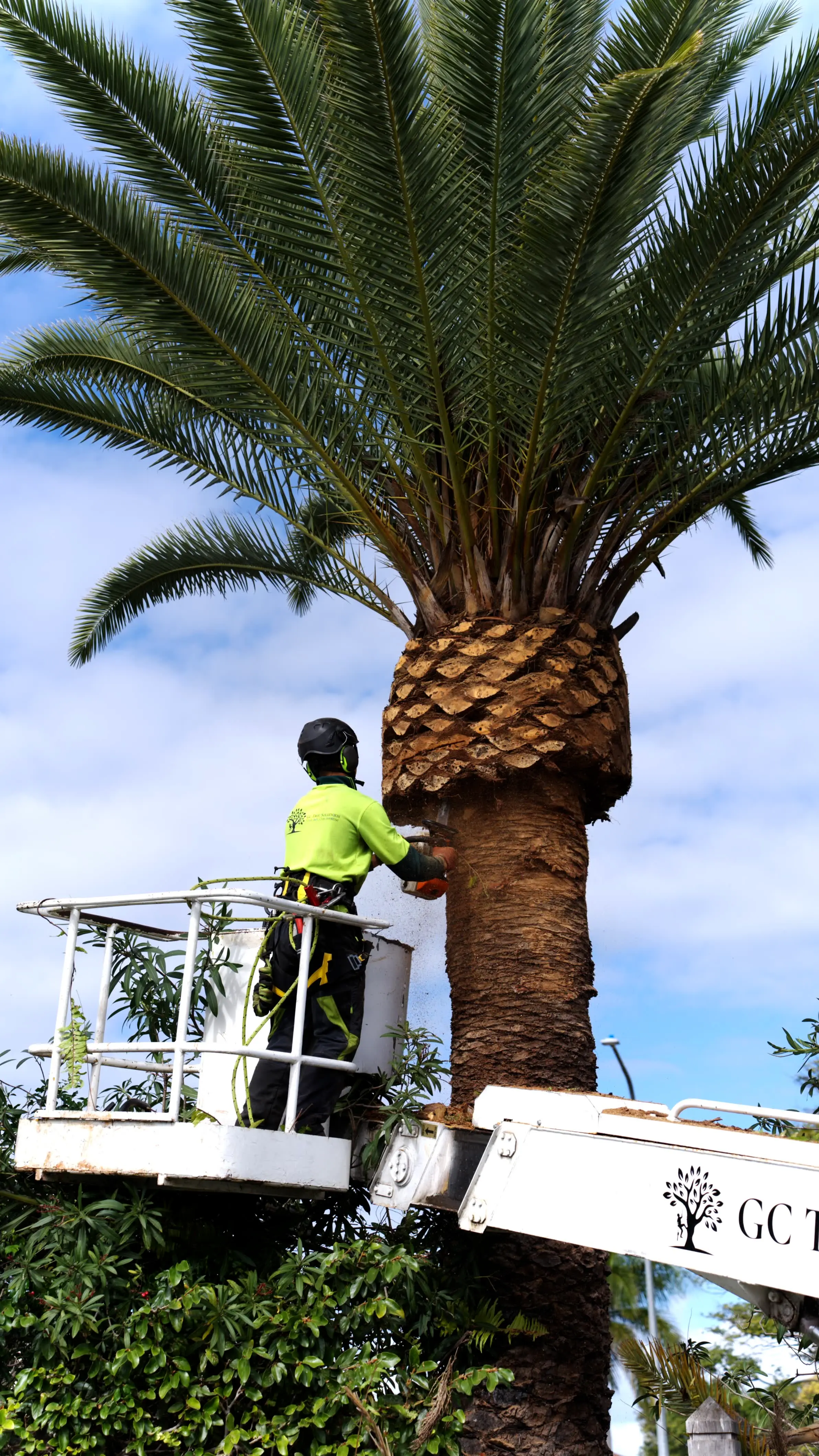
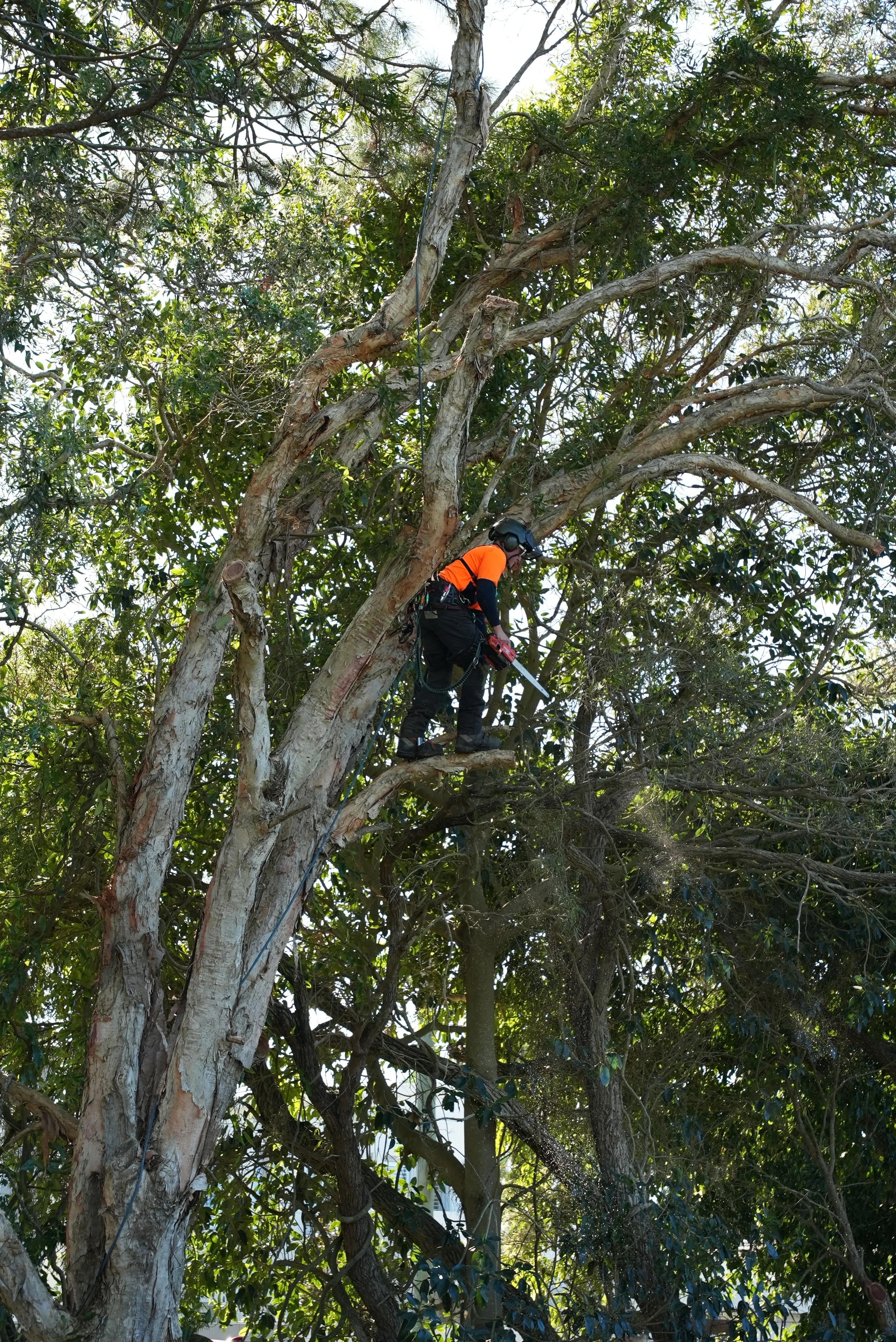
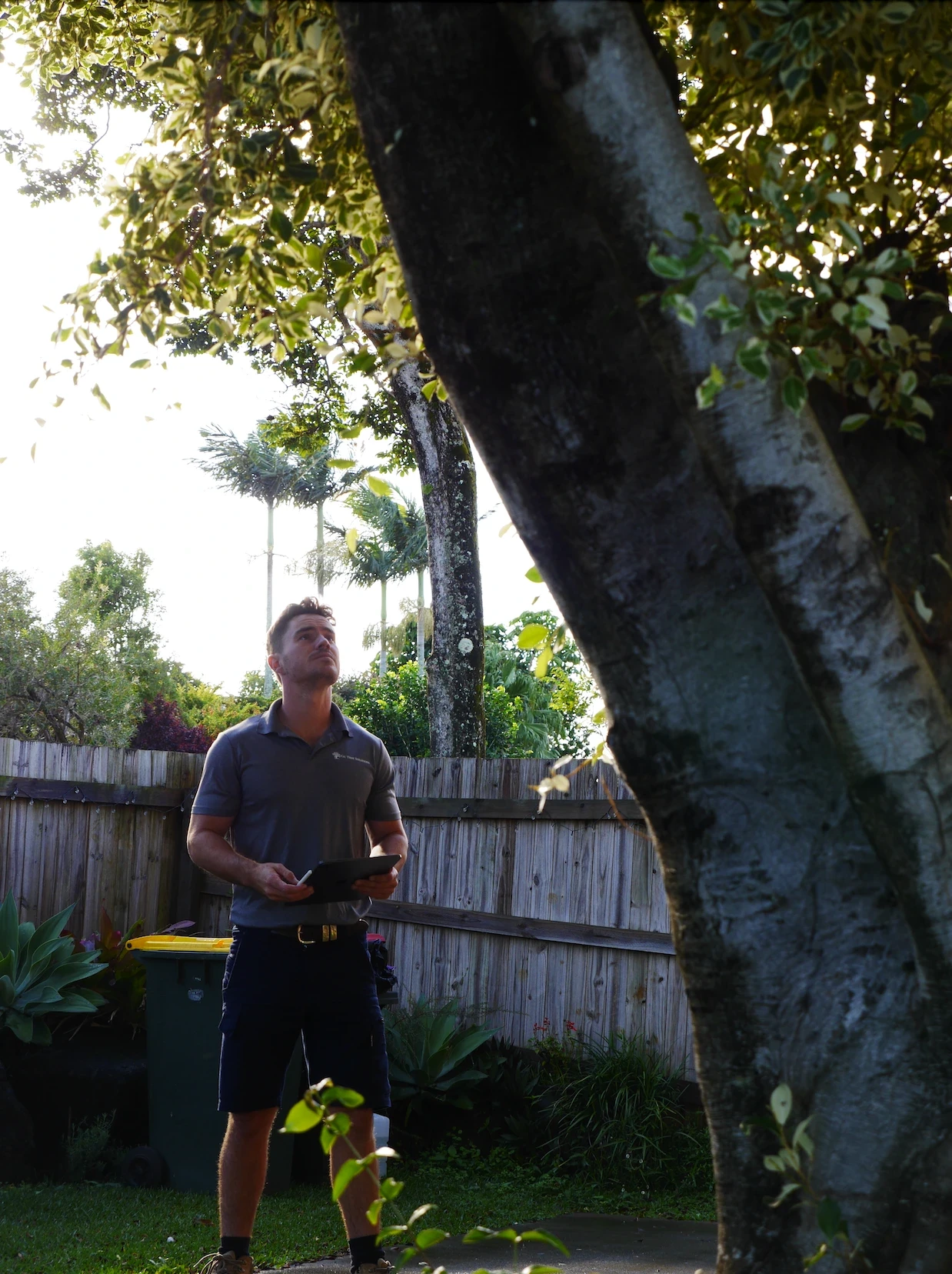
A qualified arborist assesses the tree’s health, structure and surroundings. They look for defects, decay, root problems and risks to people or property, then recommend what’s needed, whether that’s pruning, ongoing monitoring, treatment or, in some cases, removal. Where more detail is needed, such as for a council application, they can prepare a formal arborist report.
At GC Tree Solutions, our qualified arborists inspect trees for homeowners, body corporates and commercial properties across the Gold Coast. If it’s been a while since your trees were checked, contact GC Tree Solutions for an obligation-free quote.